
Bridging Cultures: The Intricacies of English to Hebrew Translation and Cultural Localization
In the world of translation, the journey from one language to another transcends mere words; it's a delicate dance between cultures, traditions, and values. Nowhere is this dance more apparent than in the realm of English to Hebrew translation, where the rich tapestry of cultural nuances presents both challenges and opportunities for translators seeking to convey meaning across linguistic borders.
One of the most fascinating aspects of English to Hebrew translation lies in the process of cultural localization. It's not simply about finding the equivalent words; it's about capturing the essence of the message in a way that resonates with Hebrew-speaking audiences, taking into account their unique cultural context and worldview.
Consider, for instance, the challenge of translating terms related to marriage customs. In a recent project, I encountered the term "shiduch" in English, commonly mistranslated as "matchmaking." However, this term holds a much deeper significance in Hebrew culture. While it does encompass the concept of matchmaking, its roots lie in the tradition of arranged marriages, a practice not only prevalent among Ultra-orthodox Jews but also among Bedouins.
In translating an autobiographical book of a Bedouin man, finding the right word for "shiduch" was crucial. It wasn't just about accuracy; it was about honoring the cultural nuances embedded in the narrative. After careful consideration, I opted for a translation that conveyed the essence of arranged marriages within the Bedouin community, capturing the intricacies of their customs and traditions.
This example underscores the importance of cultural sensitivity in translation. It's not enough to simply transpose words from one language to another; translators must act as cultural ambassadors, bridging the gap between languages and fostering understanding across cultural divides.
Moreover, the process of cultural localization extends beyond individual words; it permeates every aspect of the translation, from idiomatic expressions to societal norms. In the realm of technology, for instance, translating user interfaces requires careful consideration of cultural preferences and conventions. What may be intuitive design in one culture could be perceived quite differently in another.
As translators, we must navigate these cultural intricacies with finesse, drawing upon our knowledge of both languages and cultures to create translations that feel native to the target audience. This often involves consulting with native speakers, conducting research, and remaining attuned to evolving cultural dynamics.
In essence, English to Hebrew translation is not just a linguistic endeavor; it's a journey of cultural exploration and exchange. By embracing the challenge of cultural localization, we have the opportunity to foster greater understanding and appreciation between diverse communities, one word at a time.
ראש הטופס
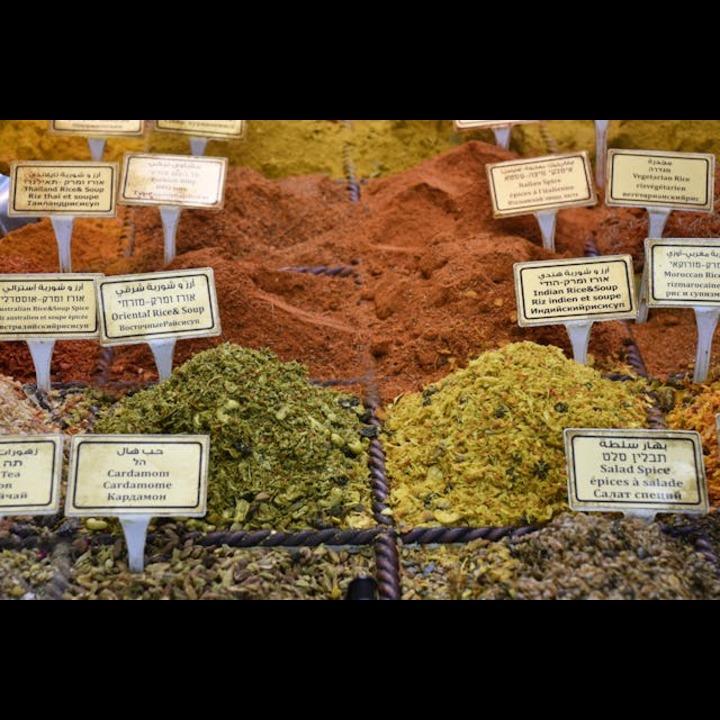
Photo by Jacob Moseholt: https://www.pexels.com/photo/assorted-dry-spices-with-inscriptions-in-local-bazaar-4453872/

נעים להכיר, שמי שושי הרשקו, מתרגמת מאנגלית לעברית ומעברית לאנגלית. עוסקת בתחום משנת 2005 ואפילו לפני כן כתחביב ועזרה לחברים ומשפחה. אוהבת לחקור וללמוד, אוהבת לגלות שהתרגומים מגיעים לקוראים שנהנים מהס